Scope of work
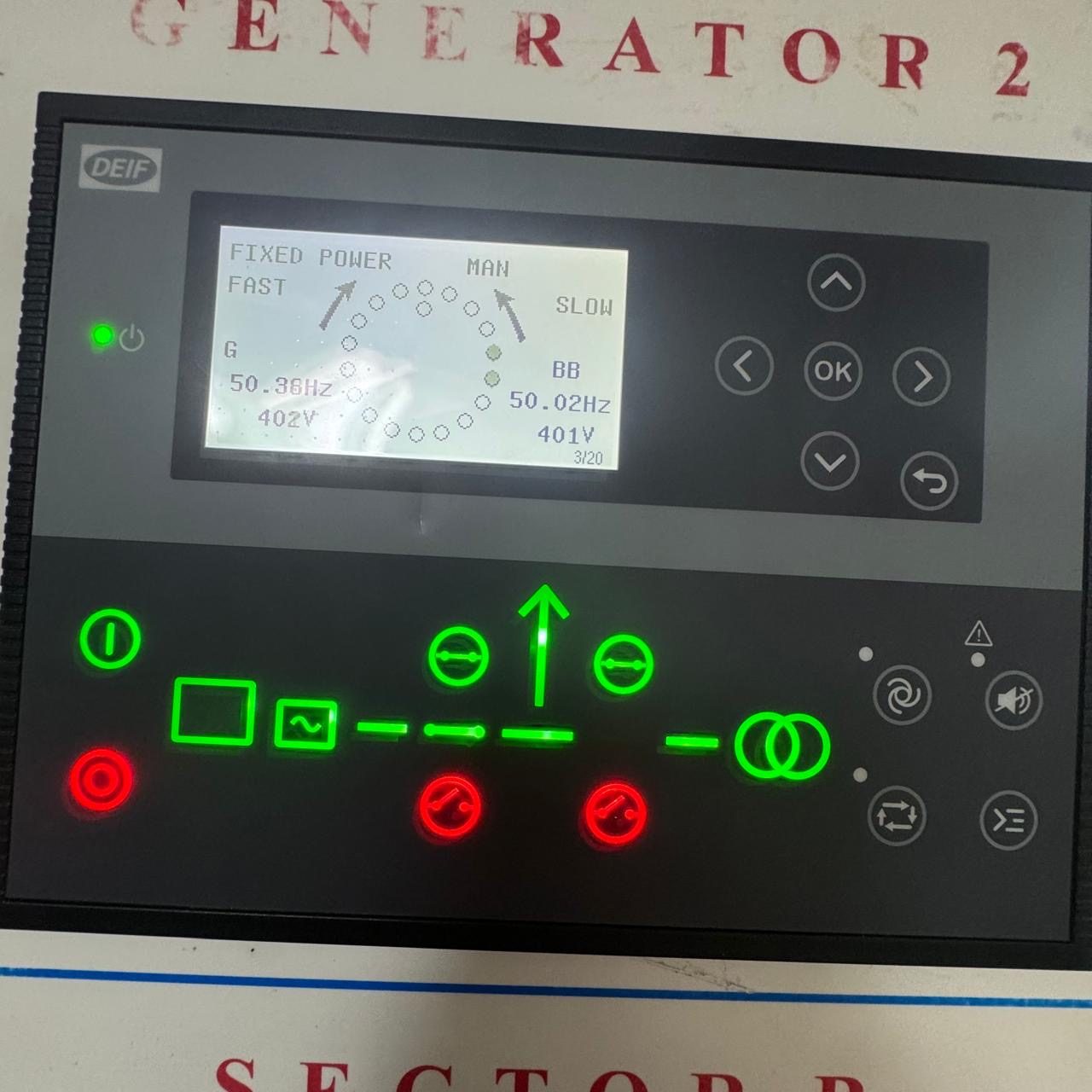
- Automatic synchronizer setup: dV, df and dφ windows, breaker closing-time compensation
- Check-synchronizer verification as an independent protection
- Isochronous or droop governor configuration per application
- kW load sharing between gen-sets of different rating or make
- kVAr / power-factor sharing via AVR and elimination of circulating currents
- Reverse-power, overcurrent and unbalance protection settings
- Loading and load-rejection testing with recorded results
Typical symptoms & failures
- A hard thump or vibration at the moment the breaker closes
- The synchronizer hunts and never locks inside the window
- Unequal kW split — one machine at 90%, the other at 20%
- High circulating currents and heating with no matching useful load
- Reverse-power trip when unloading a generator
- Frequency instability after every load step
What you receive
- Synchronizing and protection settings recorded before and after
- kW/kVAr measurements per generator at no fewer than three load points
- Paralleling and load-rejection test protocol
- Findings on any governor or AVR needing service
Equipment & protocols
- Automatic synchronizers and load sharers, analogue and digital
- Electronic governors and actuators, mechanical governors in droop
- AVRs with cross-current compensation and paralleling CTs
- Power-quality instruments and recorders
From the field
Frequently asked questions
Can generators of different makes be paralleled?
Yes, and it is common on vessels with a retrofit history. It needs careful droop and AVR setup so the machines share proportionally rather than absolutely.
Why does a healthy-looking generator go to reverse power?
Usually it is governor setup or unloading sequence, not a machine fault. We check the ramp and the command order before touching the engine.
How often should synchronizing be checked?
As part of the annual survey, and always after any work on a governor, AVR, breaker or controller.